It was hard to pick a God… There were so many to choose from.
Author: nikkie
From an early age, music has been an influential force in Nikkiesha’s life. From the time they discovered Michael Jackson and wanted to sing and break dance like the King of Pop, to being so consumed that Nikkiesha and their siblings performed talent shows in their living room while their parents were both audience and judges, they knew the importance of music.
Nikkiesha (Nikkie) grew up with music around them! In addition to countless talent shows, their home was literally seconds away from a panyard - Panosonic Connection Steel band Orchestra’s panyard. On many late nights, when they should have been asleep, Nikkie’s parents would find the seven year old perched at their bedroom’s window listening to the orchestra practice for the largest steelpan competition in the world: Panorama.
Nikkie’s older brother played the tenor pan for the orchestra. It was witnessing their brother practice which ignited their mesmerized obsession with the instrument. Nikkie took any opportunity to try and play the song their brother was practicing. They didn't care how much noise they made, or how many times they got into trouble for beating their brother’s tenor pan. Nikkie couldn't resist the pan’s allure.
Their love and passion for the steel-pan never died after the age of seven, as twelve year old Nikkie, determined to be a part of the steel-pan culture, began running away to the panyard, and giving the rehearsal director hell - picking up the orchestra’s panists’ sticks and beating any of the unattended steel-pans.
At the time, they were unaware of the difference between beating and playing the pan or any other percussive instrument. The rehearsal director started them off on the Gurndig - better known as the Double Guitar. The Gurndig is similar to the rhythm guitar in a rock band. He told Nikkie if they can learn and master how to play the Gurndig well, they could then move onto their desired pan: the shiny chrome tenor, the soprano, the lead pan in the orchestra.
Knowing they weren’t going to stop running away to Panosonic's panyard, Nikkie’s dad decided to become the orchestra's manager.
As Nikkie got older, they began listening to R&B, Blues, Jazz, Rap/Hip-Hop and Rock music. To their great enthusiasm to hear and experience different forms of music, after migrating to the US, Nikkie was exposed to sub-genres and even more diverse sounds.
Inspired they began to play different instruments: acoustic guitar, the congas, and the drum-kit. Eventually spending more time behind the drum-kit, Nikkie began playing with various rock and punk groups. Most notable, the woman fronted rock trio Telenovela Star whose single, "Car Song" was the theme music for The N Channel’s Beyond The Break.
After many years of playing behind the drum-kit, Nikkiesha is bringing all that they have learned to create and produce their first album, which is a tribute to their late mother and brother.
I was so inspired by the The Sea I wrote this sort of sci-fi story. I’m hoping to adapt it into a short film for the song The Sea off my EP, QUARREL. If you’re an animator and you’re interested, or if you know an animator who would be interested, get at me! I’m aware of all the urgent issues we’re facing, and the environment is one of those issues for me. I think about what kind of world future kids would have to live in because of choices we make today. This is primarily what the story is about, and also these kids’ resiliency while facing great adversity.
In Spirit of Borges’s “Mutations”
After the collapse of the global empire, they are the children left. Descendants of the human race, whom survived the nuclear blast.
The nuclear blast destroyed all infrastructure and further poisoned all natural resources; leaving the land and the sea barren.
Affected by the toxic radiation, many living beings died immediately. Those beings whom adapted to the poison, became radioactive mutants; passing this gene onto their offsprings.
The life expectancy of anything became almost impossible to predict. As after birth, most beings experienced accelerated growth spurts. Aging exponentially in minutes, a baby can become an adult in a week; and if it survived the environment, dies from accelerated aging within a month.
The remaining scientists developed a vaccine which temporarily blocked the growth spurts, but they were still incapable of completely reversing the mutant gene which affected aging. So the life expectancy for any human is eighteen years, if that. They also were incapable of treating individual mutations; as the gene affected each human differently.
The human survivors live in the deep tunnels of once major hubs; creating underground shanty towns, or they populated caves until the rising tide flooded these temporary cities. The ever rising tide has drowned entire islands. The survivors are forced to return to an ancient practice of nomadism.
This is a tale of some of the survivors (approximated ages seven to fifteen):
Gus – because of their mutation they can only communicate through sounds. Their best octaves are those of seagulls: shrieking a soaring through the permanently blood orange acid rain sky, and their violent cawing when irritated. They are also twelve feet tall (and still growing), with almost elastic like limbs.
Beau – because of their mutation they absorb matter, and when agitated they become an enormous glowing mass of blue atomic energy. Their energy matter is a magnitude! Electrifying all the broken relics they and their siblings find discarded in the rising tide debris. They believe they were once the ruler of the sea: The Blue Whale.
Pen – because of their mutation, they have gill like openings around their neck making breathing the already toxic air difficult. They have an impeccable sense of smell which becomes overwhelming enough that they cannot see! Their hands and feet are webbed and flipper like… They are oval shaped, making walking and running difficult. So on days the children have to run from the acid rain or rising tide, Pen’s siblings take turns carrying them on their backs. Pen believes they could swim as gracefully as a penguin in the Sea.
Elie – because of their mutation their skin can easily create static. They can burn anything, so they cannot wear regular clothing, but a cooling skin like suit created by scientists. Because of their mutation they are capable of creating fire, which not only helps keep them all warm, but can heat and purify the toxic water for drinking and other purposes. They believe that in the sea they are an electric eel.
Buccoo – because of their mutation they can spread rapidly, changing and creating color and shapes: expressing their urgent emotion in branches of colorful reach, and mimicking their environment. Their most impressive and tranquil transformation is changing into a tree… The children read about “Trees” on a tablet they restored. With great meditation alongside Beau’s blue atomic energy, they discovered that their branches can extend and reach even further. Having the ability to create buds which blossoms into various fruit and vegetables which they all can eat! Buccoo believes that in the sea, they can become an entire reef where all can inhabit!
Scenes:
The children are performing a dance battle. Gus break dances at the start of the music. The musical instruments are from the relics, objects of the old world, which the children have collected and recreated to make sounds and to serve their needs for survival. When they are not scavenging for better shelter, the children perfect their instruments and dance moves.
With their elastic like neck, Gus interchangeably shrieks up to the blood orange sky, as their dance gracefully soars like a seagull in the shadows of the cave inhabited. They recreate silhouetted images of the dead animals who once roamed the land of the old world. They end with an infinity pose, while crying their best seagull.
It is an invitation, as Beau takes Gus’s energy and magnetically recreates their shadow. While Pen’s webbed feet and hands pulsates vibes and sustains this interaction, both Gus and Beau dance like the image frames from the broken cell phones, iPads etc. (relics) they restored.
Needing each other, the children look at each other with an understanding. As they perform the synchronized group part of the dance.
There is an old folk tale which they discovered on one of the relics. It was the tale of a mysterious sea creature – called The Douen – that bewitched children with the allure of the sea. This folk tale of The Douen was older than any of the worlds the children learnt of, as the tale was used as a cautionary example to scare children from venturing into the sea or else, “The Douen will have you for all of eternity!”
This old folk tale completely possessed them.
Gus, Beau, Pen, Elie, Buccoo were not frighten by The Douen. In fact, they wanted to find this mysterious sea creature, as none of them had ever experienced a “beach”! They have only read of the sea.
The sea of the old world was not what they’ve lived with.
They can all swim, but they could never swim enough to survive the ever rising tide!
With joyous giggles and wondrous glee, they all proclaimed their different stories of encountering The Douen.
They went to sleep searching for The Douen.
The Douen – with its broad brimmed hat made of colorful straws which hid its eyes and most of its face, and its just as brightly colored clothing – discovers their dreamings. Dancing hypnotically into their dreams, it visits their blood orange sky that rains acid. The Douen sings a song, and with each melody, it sounds fresh air inviting them into its sea, where the children become what they are:
<This is at the climax of the song, nearing the end where the guitar explodes alongside the piano’s garden forming flowers>
Bucco transformed into a entire reef garden, with ever growing green vegetation and algae, while Elie sailing along sporadically electrifies this hiddenness, while Beau gloriously spews blue through their vibrating magnitudes, while Pen swirls, somersaults gracefully through the currents, while Gus keenly looks from above, gently walking barefoot, as they squeal a joy unimaginable.
It was a big week for me, as on Tuesday, October 30th, my debut EP, QUARREL, was released. It is available for download HERE!!! It is also available on all streaming platforms like Spotify! Click HERE!!!Stream it. Share it. Download it. Put it on a phat playlist. Tell your favorite DJ to play it. Okay? Okay!
Also, I wrote a short story about a queer interracial couple navigating a world that really isn’t set up for people like them, and it is in Curve Magazine. Please read about it, as I really think it is important and it does matter. Click HERE!!!
Also, also, in celebration, I made a PLAYLIST. Here is one listing order:
I’ve been really torn about promoting my EP release show, since the world is becoming darker and darker, and posting about a show seems sort of frivolous. If not, just completely dense! But, I really believe in this album and its message. As it is sort of a fight against the crude maliciousness we are facing. The songs came from a place of seeking hope; finding another way out of despair. I truly believe art and music saves us. It has saved me time and again!
A week a go made it a year in which I went into Spin Recording Studio and recorded my debut EP, QUARREL. I didn’t sleep the previous night, as I was both extremely excited, and completely terrified! I was sitting on these songs for at least six years prior to taking that huge leap of, YES I AM GOING TO RECORD THIS EP. It was a long process getting to the place of YES, and many obstacles stood in my way, including believing I can do this.
Once I made the decision, everything came with such clarity… Even during moments of doubt, I walked through them with a flow which felt right. It was as if I was meant to do it, or I made myself to be meaning to do this! I knew what it should look like, how many songs, how they would unfold into each other while standing as themselves.
That said, although I was 100% sure this was what I needed to do, I did have moments where I felt I was losing my mind, for real! But I wasn’t walking into this fire alone. I could not have finished QUARREL without my co-producer and dear friend Mackenzie Shivers, and as well as the seriously gifted musicians/artists on the EP.
How I ended up working with Mackenzie and these musicians/artists was serendipitous as well. As QUARREL couldn’t be possible without another dear friend, Kenyon Phillips! I’m so grateful I’ve found these amazing humans who I can say is my extended family! Thank you family! Thank you Universe!
Anyway, the night of October 30th will be so very special on all levels! It is the last installment of one of my favorite humans and co-producer’s, Mackenzie Shivers, residency. If you’ve never seen Mackenzie perform, you’ll be immediately swept away by her generosity of soul (no lie!).
I’ll also be sharing the stage with some seriously inspiring and magical beings who have been consistently giving me life. Whom I righteously call The Revivals.
WHERE: Rockwood Music Hall Stage 3, 185 Orchard Street, New York, NY 10002
WHEN: October 30th, 8:00 – 10:00PM
WANT: $10
Finally, as QUARREL is a tribute to my mother and brother, I felt it would make for the best birthday gift to my dear mother, Bernadette McLeod.
QUARREL is available everywhere on October 30th! You can stream the singles, Deep Cry and Quarrel on all platforms!
In the interim, I made a PLAYLIST for Fall. Which is kind of an assorted – get ready for Winter – sort of list. If you’re not on Spotify, below are the tunes’ title tracks (with links) in one possible listening order:
I’m very excited as my debut EP, Quarrel, release and show is happening in a month (October 30th). The release show will be at Rockwood Music Hall, where I’ll share the night with the brilliant and wonderful Mackenzie Shivers. The night will be dedicated to my late mother, as it is her birthday!
Also, Quarrel the single is making waves. Here is a thoughtful review from If It’s Too Loud:
“The second single from Nikkie McLeod’s upcoming EP is a more traditionally structured song than [their] first, “Deep Cry,” was. “Quarrel” moves towards more familiar instrumentation for mainstream American listeners, but there is still plenty of originality for us all. McLeod constructs a song that starts off as a laid back singer/songwriter track, but that simmers with this undefined intensity right below the surface. That lasts for almost four minutes, and then the song restarts as an almost orchestral song. It’s an over six minute song that feels both familiar and experimental.”
Lastly, I made this super dope SPOTIFY PLAYLIST, which includes music by my favorites!
The Autumn Roses
“Written soulfully in the Parang style native to their home of Trinidad & Tobago, “Quarrel” is a well of wisdom and the poetic, epic new single from Brooklyn’s Nikkie McLeod.”
SKOPEMAG
“The new single from Afrofuture artist Nikkie McLeod is a swirling storm cloud of trial and tribulation breaking into overcoming resolution. “Quarrel” is a ballad in the form of Parang music, a traditional folk blend from Trinidad & Tobago. Its steady rise and fall captures each breath McLeod pours forth from an aching soul. The title-track is off the upcoming EP, which is a dedication and tribute to their late mother and younger brother, whose birthday is September 8. Quarrel (EP) is out October 30 in honor of their mother’s birthday.”
Both “Quarrel” and “Deep Cry” are on this really dope playlist – CHECK IT OUT!
Finally, I’ll be starting off my three month residency at Williamsburg Music Center this Sunday, September 9th, 9PM.
QUARREL, the album, comes out October 30th, which is also the release show date at Rockwood Music Hall!
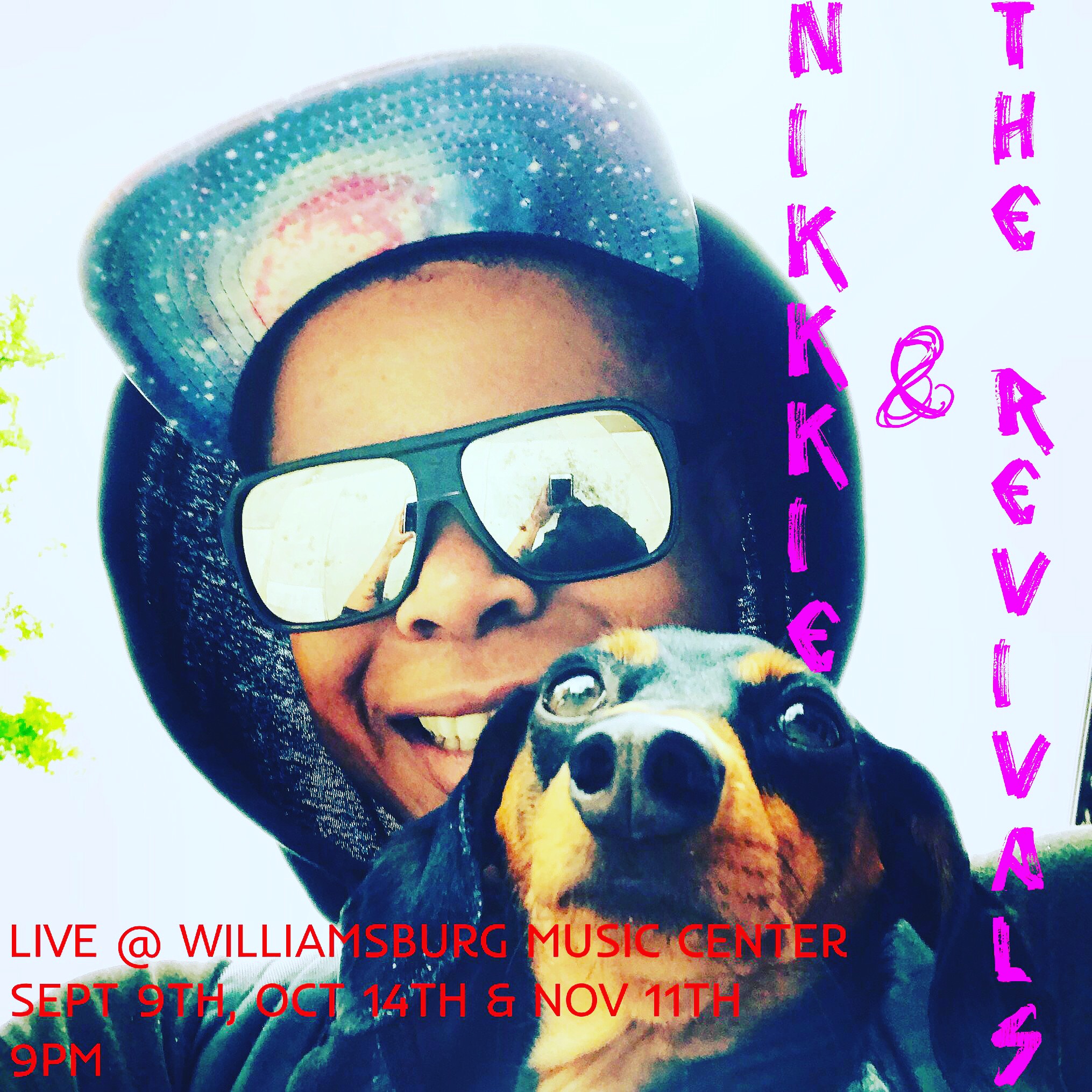
Happy to announce that Nikkie & The Revivals will be playing a three month residency at Williamsburg Music Center: September 9th, October 14th & November 11th, 9PM
Spoke a little about Deep Cry, and my upcoming album, Quarrel, on Break Thru Radio’s podcast Music Digest (click on image above for link). It was such a pleasure being on the show. It was also really hard discussing the story behind Deep Cry and the album… Give it a listen, as hosts JLM and BRYAN B shared some awesome music by artists new to me! Thanks again for having me Music Digest!
“Nikkie McLeod’s emotional Quarrel EP debut is set to be released October 30. Coming to Brooklyn all the way from Trinidad, McLeod struggled with the feeling of being a black immigrant, as well as establishing an identity as being queer/non-binary. McLeod’s music expresses their emotions, discussing society and their own experiences with the uncomfortableness in it.
The six-song Quarrel also serves as a tribute to McLeod’s brother and late mother. On “Deep Cry,” McLeod expresses feelings toward their mom’s death through sounds rather than words. McLeod’s skills on the steelpan (Trinidad’s national instrument) come through in this emotional piece. ”
“Nikkie McLeod’s song Deep Cry was one of the most popular tracks with voters and moderators this week.
Before reviewing I watched an interview titled ‘Gentle Lone Rider of The Masculine And The Feminine’ which tells the story of their childhood in Trinidad & Tobago and their move to Brooklyn, New York aged 18.
Nikkie McLeod is an inspiration, having grown up in a world that has been mostly unaccepting of their ‘beautifully singular androgyny’.
Nikkie is softly spoken and passionate, grew up a feet away from the Panosonic Connection Steel Band Orchestra, and spent nights listening from their bedroom to musicians playing steelpans. Following a move to the US, Nikkie learnt new instruments, and listened to R&B, Blues, Jazz, Rap/Hip-Hop.
Nikkie has distilled everything they have learned into their first album, which is dedicated to their late mother and brother.
Deep Cry is the album’s first single. The song takes us on a musical journey through Nikki’s life. Steelpan rhythms form the bones, and periodically new instruments accompany the arrangement, guitars, strings and beautiful harmonies. The resulting sound is unique to my ears and is a complete triumph.”
Born in Trinidad & Tobago, McLeod grew up listening to and playing the country’s national instrument, the steelpan. As a non-binary immigrant now living in Brooklyn, there is a wealth of influence behind their music. “Deep Cry” soulfully embraces a film-like reel of memories in each individual note. The first song McLeod wrote on the steelpan, its meaning wouldn’t become apparent to them until months later. They explain, “It’s a regretful song surrounding my mother’s passing, and not being able to say goodbye or make any reconciliations. I personally could not put words around losing my mother…all I had was the sound of it”.
“Brooklyn based artist Nikkie McLeod gives us our Weekend Track titled Deep Cry–a haunting futurist pop composition with a lush dramatic instrumental rife with steelpan and deeply emotive vocals. Melancholic poetry with a future forward flair…”
“Psychedelic and adventuresome, it leaps across genres and eras with a willing, thumping, hopeful heart.“Deep Cry” is the intricate, expansive brand-new single from Brooklyn, New York’s Nikkie McLeod.”
Last week, I released a single off my first album, Quarrel. The album is a tribute to my mother and brother whom have passed. The track released, Deep Cry, was particularly written for my mother. When she died I didn’t have words for what I was feeling, which was mostly a gamut of confusion, great sadness, an unbearable feeling of guilt, and an urgency to understand why? The only way I could express/communicate what was happening was through sound…
I still remember everything… I remember what I was wearing: a green striped button down shirt, tan khaki pants, and light brown leather shoes. I was sitting in my cubicle at work reading/responding to emails… At 1pm, I received the call on my work phone. I didn’t understand… I still do not completely understand… Because it was impossible. Still impossible! I felt like I couldn’t breathe. I had to get up. I had to go outside because everything was closing in on me. I remember what outside smelt like… Fresh like flowers… The gentle chill in the air was clean… But I couldn’t understand what was happening, what had happened – the impossible had happened. My mind kept playing the sound of your voice… It was alive and real! I can feel it! Impossible! The thing which still burns the most is our last conversation. We said regretful things to each other. You were always blunt, but I’ve always been aware of your enormous heart, as it is one of my many blessings from you! Your friends told us about the day this photo was taken… They said you treated yourself, spent the day pampering yourself, went and had your photo taken… It feels so good knowing this, and seeing your joy shine! Rest in Power
You can stream and download Deep Cry at my bandcamp page:
I know I’ve not been on here for quite some time… But, the good news is I’m coming out with my first album, which I’m super excited about. I worked with some amazing artist! Also, there’s a lot of steelpan! Woot! Anyway, I thought this article I originally wrote for Tom Tom magazine is a great starting point for this direction I’m heading. Here’s to things to come!
Photo: Elizabeth Maney
“Underlying the music Africans brought to the New World was the principle that music must help people live. Without being less aesthetic, this is a very functional approach, whereby music is made to give people strength when they are weak; it must lift their spirits when they are down. With music people can celebrate the joys of life, and indeed music is itself one of life’s greatest pleasures, yet it must also connect people with their ancestors in the land of the dead, and summon the deities from the heavens above. Most importantly, music must strengthen the bonds between people because only with and through others we become fully human.” –The Illustrated Story of Pan, pg.24.
I grew up surrounded by music. For most of my formative years, I lived seconds away from a steelband orchestra panyard. I remember being so excited when the Christmas season began, because it not only meant the sound of Parang, but also the beginning preparations for Carnival. It is during this season the steelpan orchestras choose their calypso song anthem, and begin rehearsing for the largest steelband competition in the world: Panorama!
My little self would stay up late, trying to feign away sleep at my window, listening to my village’s steelpan orchestra rehearse, which was one of the most magical experiences of my childhood. My brother who is a couple years older, he was allowed to play and be in the panyard. I suppose it was because of his intimate relationship with something as beautiful as the steelpan which initially made me wonder why I could not be involved in such magic. I mean, we were a part of the same magic we created for our parents when we sang together with our other siblings; when we put on our own talent shows on evenings. Break dancing, believing we were a version of Michael Jackson. So, from a very young age, my curiosity was sparked. This spark helped in my obsessive love of the steelpan.
I fell in love with the tenor pan. I fell in love with its circular, shiny chromed mystery, which to me represented, genius. I would stare at my brother’s tenor pan, completely mesmerized by what I probably did not understand at that time was the instrument’s aesthetics. The sound of the steelpan possessed me. Enough so, given any opportunity, I stole my brother’s sticks, and tried to play the calypso song our village’s steelpan orchestra chose for their ten minute Panorama reinterpretation. I did not care how much noise; how many bad notes I played trying to capture the arrangement, or how many times my brother swore he was going to kill me for touching his pan. I could not resist the pan’s hypnotic allure.
I began running away to the panyard. I possibly annoyed the orchestra’s captain with my fantasy, that I was a crackshot. When actually, I was out tuning the various pans which were left unattended. I was unaware there was a touch; a difference between beating and playing the pan. A grace.
The captain started me off on the Grundig (Double Guitar). It was both exciting and difficult learning how to play, because not only does the pan want of the player to understand rhythm, but the rhythm has to be strummed, in synced with the melodies. The touch has to be even, precise, on both pans. The physical hand coordination must execute equal independence, like harmonious ambidexterity.
The captain, satisfied that the mystery of balancing the physical motion of this hand dance for the Grundig‘s sound held my attention, told me if I learned how to play it well, then I could move onto my desired pan: the shiny chrome tenor. The lead pan in the orchestra. Nothing, absolutely nothing seemed more important, as everything meant being a part of this complete brilliance.
Though I did not have the words for it, being in the panyard meant something beyond the zeal I felt. I’d goggle at the crackshots – the steelpan prodigies, the steelpan god geniuses – in complete awe, because they knew something far beyond my obsession and shared love of the instrument. Yes, even though they were possessed as I, their lives surrounded living and breathing for this period in Trinidad and Tobago’s celebratory uproar for freedom. They lived for carving the arrangement into their hearts; for the united dance of going into battle with their fellow pannist. I wanted to be like them.
“[Clive (legendary steelband arranger] Bradley himself said that Carnival is a healing time for us, it is a golden link that runs through everybody, it is a connector for all of us, and he used the music to reflect his relationship to the band and the community.”The Illustrated Story of Pan, pg. 228.
My parents became concerned about my presence at the panyard. Although my brother and I are close in age, there were not many young girls, and very few women pannist in the orchestra. With a playership which can exceed eighty members, the beginner age for a steelband orchestra’s pannist can be as early as a six year old to however old a pannist wants to hold on their sticks and play. This in itself, the wide diversity of ages, symbolizes the unison nature of the steelband culture. It also made me wonder why I could not join.
“My pan sticks. Look at them. I was proud of my pan sticks. The Ministry of Culture should teach that to people. Our sticks should be cherished. We shouldn’t be knocking up the pan any more. I lost a lot of friends. You couldn’t be seen with a pan stick: ‘You in a panyard?’ Of course you play piano or guitar. People looked at you in this scornful way, even though you had the cream of the crop next to you playing pan, doctors and lawyers. I was first female member of Renegades 16 years ago, on nine-bass… It’s as though you now become the music. If your spirit not in the music, you can’t perform…”The Illustrated Story of Pan, pg. 256.
The panyard was considered a predominantly male space. A space born out of poverty, branded as criminal, possibly even labelled uncivilized in its early days. While that stigma was shifting during my brother and I’s youth, the attitudes surrounding the panyard – where the steelpan lived – was still viewed as one where safety and the ideas surrounding privilege was open-ended for boys and men. The image of the panyard was regarded as unsafe and was not an activity deemed proper for a lady. The irony of this dynamic’s then unspoken stigma of criminality and respectability, which haunted the instrument, is that it made the steelpan inaccessible to everyone who shared in this struggle for freedom.
“[The steelpan] limed outdoors and was wild. The piano sat indoors and was respectable. Piano lessons were part of a decent girl’s cultural finishing. It combined a classical “culture”, the discipline of practice, and domestic entertainment. For males it was different. In the US the piano had a wild streak in the saloons, where men created ragtime, boogie woogie, jazz and rock-and-roll, but in Trinidad young men beat drums and invented pan.” The Illustrated Story of Pan, pg. 248.
What cannot be ignored in the discourse surrounding this gender dynamic is its concurrence with the rise of feminism, and the history of the United States. As they are deeply influential, but at the same time of the shared similarities of exclusion, it is completely different for black women and girls in Trinidad & Tobago. There must be the allowances for when the United States was no longer a British colony, but the country itself was participating in slavery and the slave trade; to the abolition of slavery; when segregation began; to the civil rights movement, to the rise of Black Panther, the Harlem Renaissance, the Negritude Movements… These periods all connect together, and played a significant role in the dialectical discourse of transatlantic feminism. “[The 1970’s] Black Power allowed women active if not leadership roles, and it infected everything. Grassroots women joined steelbands as never before.”The Illustrated Story of Pan, pg. 254.
The lacking of historical presence of women and girls in the panyard is rooted in the creation of the steelpan itself. A history which is tied to and intersects with absenteeism slavery and classism, or in more contemporary terms: respectability. In the various forms of the steelpan’s inception, it was not even viewed as an instrument. The first steelpan orchestras were not even considered orchestras. Whilst it was celebrated during its early development in the 1950s, it was in the form of earnest political agendas. Prior to the seventies, it was not even thought of as an artform, as culture. During the 1930’s, the activity itself of playing the steelpan signified criminal, vagabond, hooligan.
“Daisy James’ younger sister wasn’t allowed to enter a private school… because word got out that her brothers were in Casablanca [steelband]. What would have happened if it was known that Daisy was in the band too? … when Daisy was six in 1944 she secretly played with [her brother’s] pan at home… [Daisy’s brother] had to sneak her out because their mother was against even the boys being in a steelband… however, until Eric Williams, who was hero-worshipped by Daisy’s parents, came to power in 1956 and his government endorsed the steelband. Steelband, initially a rage among teenage boys, was not in schools before the 1970s… In 1965 (The Nation, January 1, 1965 p.7) Eric Williams [Trinidad & Tobago’s first Trinbagonian Prime Minister] exhorted, [`]Let us catch them, as we are doing now in cricket… The schools would require some funds for the provision of the necessary instruments. But if this can be associated with the spread of musical instruction in the schools… we will thereby taking a powerful step in the direction of giving our native talent a professional foundation. [´] Yet only in 1972 did pan enter the education system…”The Illustrated Story Of Pan, pgs. 233 & 237.
The impetus for the creation of the steelpan plays to an immediate reaction to a law. In response to the Canboulay Riots, former slaveholders banned the use of African drums by the ex-enslaved and their descendance. It was feared that, through drumming, the ex-enslaved were communicating to ignite revolts in the Caribbean. “The whites feared and loathed black music-making. The noise disturbed them. The drumming and dancing outraged both their musical tastes and their sense of propriety. They especially appalled Protestants, for whom the Sabbath was sacred and the African music satanic. Additionally, the whites were terrified of unsupervised slave gatherings. Indeed, in 1805 a drum dance carded for Christmas by the slaves of several plantations in Trinidad’s North-West Peninsula was brutally suppressed for fear of being a planned rebellion. But in 1882, the government introduced a “Music Bill” that made a police licence necessary to beat drums, tambours and shak-shaks from 6 a.m. to 10 p.m., after which it was absolutely prohibited. Public outcry forced the government to withdraw the bill, but Ordinance 11 of 1883 was passed to make property-owners liable for “rogues and vagabonds” on their premises singing and dancing to drums. There were riots when the police tried to stop the drum dances, but gradually the African drum was excluded from Carnival.” The Illustrated Story Of Pan, pgs. 25, 32. Because of this ban (law) and destruction of all African drums, the ex-enslaved in Trinidad began beating the stems of bamboo trees. This practice, which was eventually outlawed as well, is known as Tamboo Bamboo.
‘“White French Creoles controlled Carnival in the Savannah. Before the war poor bands had bamboo tamboo. Middle-class people had orchestras on foot, complete with drums – 12 to 14 people with reliefs. Middle-class people on lorries had a trio sitting on the lorry hood. Those glorified to play on a lorry, you get to pick of women. We tried to get through side of the truck to pull their dresses. They said ‘We don’t play foot mas’.’ The Illustrated Story Of Pan, pg. 33
Many Trinbagonians still keep to this tradition of playing Tamboo Bamboo during the Carnival season, as its significance, as does Carnival, symbolizes the August 1st, 1838 declaration of emancipation of the enslaved in the twined island under one republic that is Trinidad and Tobago.
The playing of Tamboo Bamboo transcended into the Ping Pong, as discarded biscuit pans exported by Britain into the dependant colony was the derivative of the steelpan. Although the Ping Pong was integral in the Carnival celebration, the stigma of criminality persisted, as the island was still under British colonial rule. Even after emancipation, the governance of the island was one of absenteeism regulation which existed during slavery: the dominant population of black ex-enslaved and descendants of black ex-enslaved ruled by decrees, laws, religion, aesthetics, etc… from the outside.
It is not a coincidence that the evolution of the Ping Pong to the first steelpan – wider in octave range – coincided with the period of World War II. Amongst Trinidad and Tobago’s many natural resources, the most valued was the island’s oil resource. Because of the economic realities (which I won’t go into here) of World War II, British colonies like Trinidad and Tobago, with a geographical proximity to Europe and the United States, played an important role in the supply of petroleum. These colonies natural oil resource were used in the economic market as a point of control, a source of and as oil reserves. The steel barrels (drums) which were used to ship Trinidad’s oil to Europe and America, these oil barrels became an ingenious raw material for the steelpan musical inventors.
Still under an Victorian British rule of aestheticism, religion, philosophy of life, economical value, etc. – because Trinidad and Tobago gained independence in 1962 – it was undignified for a “lady” to play the pan. For women and girls’ involvement in a steelpan orchestra, outside of providing a yard where the pans can live and the steelpan men and boys can play, meant “vulgarity”, “looseness…” Most of the women who were a part of orchestras during pan’s early days and during World War II were not playing the instrument. Their roles were of flag women, which was originally done by men and/or boys; and in many cases women showed their support of the steelband movement by providing safe havens for the boys and men who played in bands. Thus, the underlying discouragement stemmed from both the stigma of criminality, Victorian idealism of respectability, and as well as the norms of sexism intersecting in this ridiculous organism.
“Women were vital from the outset. As heads of households many were in a position to give succour to the youths at a time when they most desperately needed it, because a steelband without a home quickly died. Such women were supporters, lovers, flag-wavers, sex objects, weapon-bearers or even fighters in the band but almost never pannist. Their role was just another aspect of the traditional sexual division of labour.”The Illustrated Story Of Pan, pg. 238
The criminality/respectability of the steelpan slowly shifted in the seventies through the nineties, and this may have been heavily influenced by Trinidad and Tobago’s public recognition of the steelpan as the country’s national instrument, dated August, 30th 1992, which may have been encouraged by the shift in imperial power from British to the United States, coinciding with the global recognition of the steelpan as the first, and only instrument created in the 20th century. The country’s middle class, mothers, radical movements such as the country’s vibrant trade unions; these groups involvement in the steelband movement helped shape the future longevity of the steelpan by cultivating the instrument into the education system which ultimately made it accessible to women and girls. With these shifts in power and ideals, the image of the steelpan began to change, and more women (although still disproportionate to men and boys) began to play.
This shift is most dramatically demonstrated in 2014, as women and girl pianist’s involvement were highlighted/documented in that year’s Panorama. I believe this initiative is related to the creeping rise of feminism in the Caribbean. In fact, Trinidad and Tobago appointed the country’s first woman Prime Minister, honorable Kamla Persad-Bissessar, in 2010, precursor by Jamaica’s honorable Portia Simpson Miller, in 2006.
Since my passion for the steelpan never died; wanting to play tenor in the orchestra still absorbed me at twelve. Knowing I was not going to stop running away to the panyard, my parents allowed me to join. I am really thankful they finally did; as I daydreamed about playing for our village. With a great sense of what may have been pride, I hungered for Panorama. Every chance I got, I continued to steal my brother’s sticks… I wanted to be like the brilliance that is the late artist Pat Bishop, and all pioneering rebel women steelband orchestra conductors. I wanted to be a crackshot. I wanted to play.
I have been trying not to feel for awhile now, especially when I got the news about my younger brother’s death. What is the use of feeling anything, when there is not anything that can explain why, and even if there was an explanation, it still will not prove to be comforting?
I have experienced this sort of loss before — the known inconceivable… I think now, I have become so use to not going to places where it hurts the most, I have been consciously mindful of stopping myself. Locking something too painful to deal with in a place where, maybe, I will never have to visit? This has made me even more bizarre and un-relatable…
I could not attend Jason’s burial. The only way I was connected to saying a final goodbye was by keeping in touch with my other siblings. It was incredibly disjointing — a complete disconnect, that continues to haunt me — even as I try my best to ignore it. In a way of bringing some semblance of letting go, I have been slowly writing… But, here, — in the process of writing, as its effectiveness as an aid, a form for closure — this form of a ritual I have continuously chosen for dealing with most things which disturbs me, even here, there is not any comfort, and it does not explain anything.
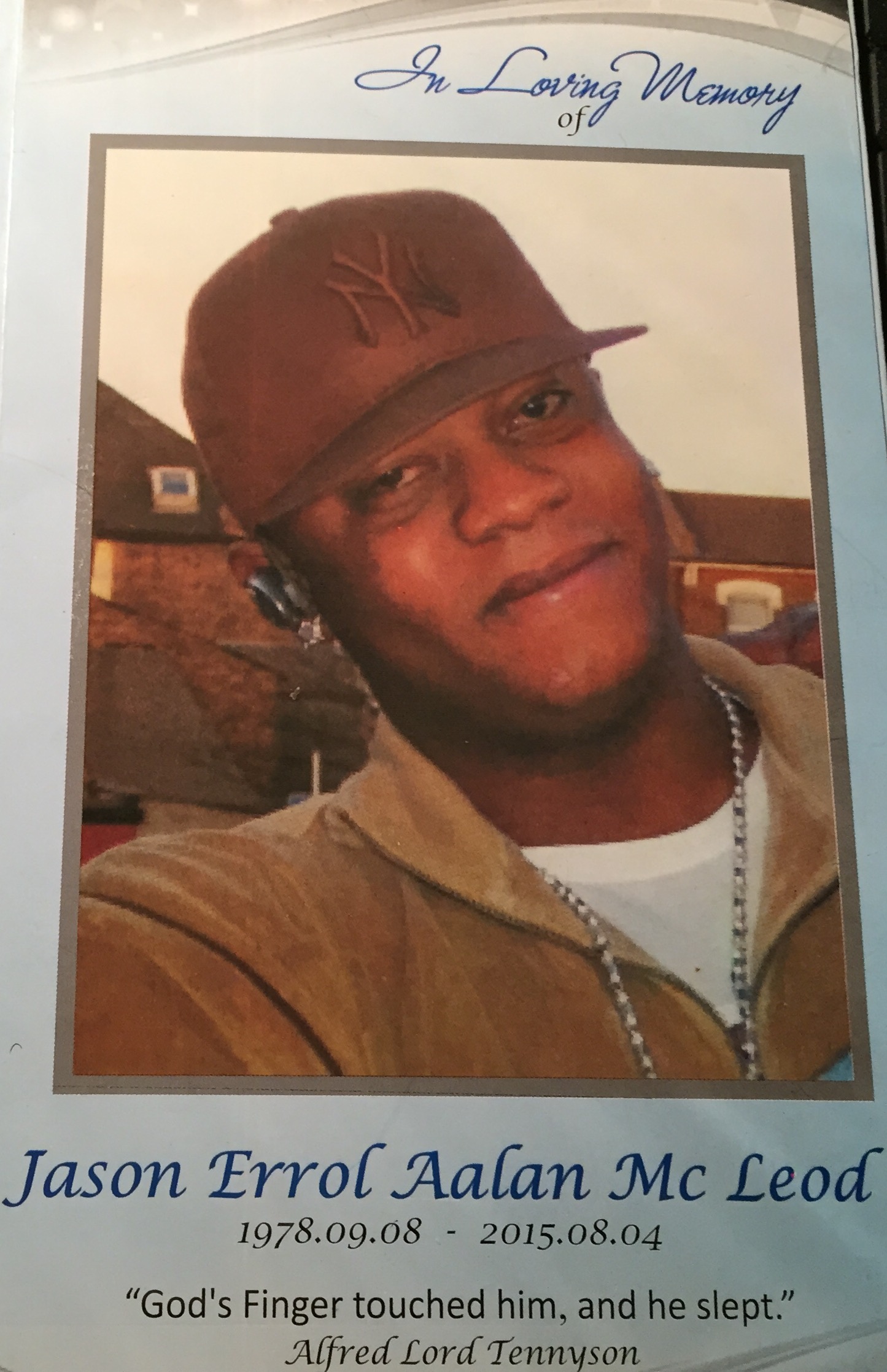
When the program for the burial arrived, I could not look at it. I knew if I stared for too long; looking for some understanding of why I will never see or hear Jason again, it will be a crippling devastation. A devastation where I was and am unsure of my return. I’ll have to contend with this unexplainable knowledge in this unsatisfying state, that he is dead and never coming back, and everything we experienced together is left in this space, this void where nothing moves, nothing grows, nothing reconnects…
I look at this program and its encapsulation of my little brother’s existence. I look at it with the same distance I have for everything that I can’t explain, and exhausted by the energy needed to get close enough.
These are the words I wrote for Jason:
Jason never asked permission for anything. Many times this arrogance was unnerving, and the question of, Who are you to have such an audacity?, would arise. I asked it throughout our childhood. I honestly believe, if he was ever asked this question, he’d simply reply with all smirks, “Well, I am Jason Errol Aalan McLeod.” I may have been the closest to experienced Jason’s budding arrogance, as I still remember when were kids, and he sold, unaware to me, my bike.
Even though Jason is two years younger, the dynamic of looking out and caretaking of a little sibling was reversed, he took care of me. He took care, wholeheartedly, in his support of my then unknowing aspirations and endeavours of becoming an artist. He was present for all of my first singing group’s rehearsals. Jason possibly is the first person whom saw and accepted my dabblings as potential, as he acted as the singing group’s business consultant and manager. At fifteen, he believed in me, when I did not recognize it.
Jason’s death is a tremendous weight on my heart, because even in our distance and the possibility of renewal of where we left off, there is now no longer a connection. An overwhelming void, which I cannot begin to understand and reconcile is where and what is… What comes close to any comfort about this realization, that I will never again see Jason’s mischievous, cocky smirk, is that he gave us an incredible gift of two amazing lives whom are Jayson Junior, and Israel. He also gave us thoughts which will continue to provoke our very existence. When he was nineteen, he taught, “You have to live your life not by others’ standards… When you choose on your terms, at least it is on you.” Love you Jason.
I think the hardest of all, and why I have chosen not to feel anything, is that this would open an infinitum grief hole. An infinitum grief hole in which I have no control.
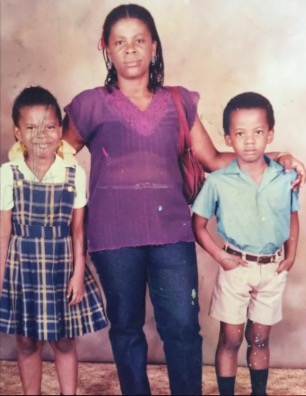
What comes immediately to mind when I look at the below photo is, I have lost both of them. I remember when it was taken. It was Jason’s birthday. He and our mother were to spend the day together; just the two of them. He was so annoyed I was brought along. When the photos were developed, he tried to scratch my face out of them. If you look closely you can see the scratches. We were very young, so we lived for each other’s annoyance.
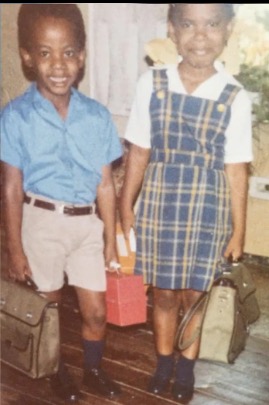
This next photo is of us, Jason and I, on our first day of a new school year. In spite of the many sibling disputes we naturally had, there were these moments:
Eyes On the Elbows’ debut album Decay is far from a state of festering decomposition, since on every track you see colors dancing in a sometimes fury escape of wild emotions, to a slow disappearance of a strange moss that is plantae. Maybe the idea is that, within decay there is growth, movement, since decay itself is organic matter. In which case, Decay, the album, achieves this process of transcendence, as it uses many popular niches of previous soundscapes, zeitgeists, what have you, and reinvents them. Well of course, the band itself is not even a band, but a very diverse community of musicians coming together by exact chance for jam sessions. This experience is possibly very reminiscent of the collective Broken Social Scene, the exception being, Eyes On the Elbows sound is taking, involving, not only the decay of indie music, but music that was once popular, that are now worn and cast aside into the ether.
Decay begins with Broken Country. A creeping guitar, nostalgic in its purposeful delivery, time travels to when punk and post-punk was a thing, and bands like the Gang of Four were rebelling against the superstructure. Broken Country enlightens and links this commonality of the social and political ills of society to as far back as when “civilization” began. This seems evident with the well placed medieval, grand opera, vocals mixed alongside tribal drumming. We return to the 20th century with the introduction of jazz saxophone, which not only marks a new and different musical direction for Broken Country, but as well demonstrates how much that has been learnt, “discovered,” but yet socially things are exactly the same. The presence of the accelerant nature of contemporary technology further amplifies how drastically behind social progress is against technological advancements.
This imbalance is sharply recognizable in Decay’s second track, Raise Your Heads, as the song’s usage of contemporary tools manically implodes, explodes, and finally collapses. Raise Your Head’s hinting of the musical genre Jungle and its derivative, Drum and Bass, demystifies, rejects, and welcomes the idea of the drum-machine. The ghosts of the past are rediscovered and are digitally dressed up in the song’s refraining chant: Raise your heads above your phones. The song passionately expresses extreme, dangerous anxiety, which is pretty much how we avoidingly exist. The suggestion in Einstein’s famous quote is immensely felt: I fear the day that technology will surpass our human interaction. The world will have a generation of idiots. His fearful posit exposed something far greater than idiocy, but more indicative of the growth of complex irrationality.
We are brought back to the breath on Subterfuge, as the song invites everything that is ignored. The breath existing in this sound waits, allows for gills to respire, for photosynthesis to be discovered. The patience held in every motion, alive in each phrase as subtlety flutters, are the whys we want to communicate with each other. In the simplistic vocal phonetic of Subterfuge’s initial tum tum tah, it describes the wonders of internal beauty, small galaxies under-discovered. Larger than the confusing guile of what is presented, these small galaxies in tum tum tah are given realization, to acquaint themselves, dream even expansively further than a passage of the allowed kind of acceptance that is “journey.”
Subterfuge’s sudden ending destroys the found cohesion of the breath. The introduction of the thickly synced riff of the horns with the heavy bass on Thirteen (when I Was) nomadically drags an uncertain travel. Uncertainties that are richly layered, hypnotically romantic enough for intrigue. The bass’s wide-reaching risk of a recurring evocation reveals an existing foreboding in its distorted melodies. There is nothing safe about this wandering. It is perspicuously suspect, even in the voicing of the horns’ fleeing mirth; there still is devastation.
California Chill is comforting, especially with its wanting to relieve that hunger for reciprocity. Lampooning its glee, the song plays upon the bright shimmers of appearances, while there is a sickening buried deep within. Its rhapsody is almost a Shakespearean soliloquy, a scene of falsehoods displayed as cinematic fashion that is a mirage, a “vision.” The lethargic dream like guitar riffs déjà vus an action to wake up, but its repetitive executions is a defeatist attack against a consistent sleepwalking, a chemically altered state. California Chill expresses an addictive want for a panacea, as it liquidly glaze effortless ease.
The parody does not end with California Chill, it continues in the less sophisticated track Ptandr’usk. Ptandr’usk’s lack of sophistication has everything to do with the song’s deliberate efforts at expressing buffoonery. What better way to do this, but by listening in on a conversation between two teenage boys speaking in German about their exploits at a party. The seriousness of their account is the butt of the joke, as the song’s instrumentation indulges and teases this dialog, while simultaneously snickering on the side. The use of droning techno give rise to this experience, as the environment slips from being in a video arcade to a club, where the walls are a living pulse; where all inhibitions are abandoned, and one cannot help but lose themselves in a wild dance.
Responsive to Ptandr’usk’s buffoonery, So What Do You Want returns to Decay’s unchanging narrative: the search for clarity. It moans a very human condition; the experience of loss resonates from the onset of its introduction. The barrenness of its instrumentation spotlights a core of soulful longing, which the bass and drums drives forward. Their rhythm and blues riff patterns maintains a grounding for the vocals and other instruments to delve into and investigate. So What Do You Want begs for answers in its tonality, and its lyricism portrays this predicament.
Decayends its kaleidoscopic undertaking with the instrumental track Not The Best of the Evenings. The track attempts to thread a closure for all the avenues, alleys, vestiges existing in the album. Even though Not The Best of the Evenings’ jazz fusion style is an intellectual endeavor for closure, it does not pretentiously reconcile Decay’s conundrum. It however brings about more ceaseless questions, but it appears that there is a level of placidity with this acknowledgement, which is completely satisfying.
your very name
provokes investigation
if someone wants to know
more than the surface.
I met you in 2012
you wore mismatch Converses
maybe that was meant to be a purpose
I did not care about their purpose
then intentions?
I cared more about knowing.
In a protective way
I still wanted to know more
more than mismatch shoes
paranoid assumptions
the invalid account
for which does not tell
allow anything other
than your perspective
from what is learnt
in what is believed
by our own poison
by what we are told.









 COCOYEA
You must be logged in to post a comment.